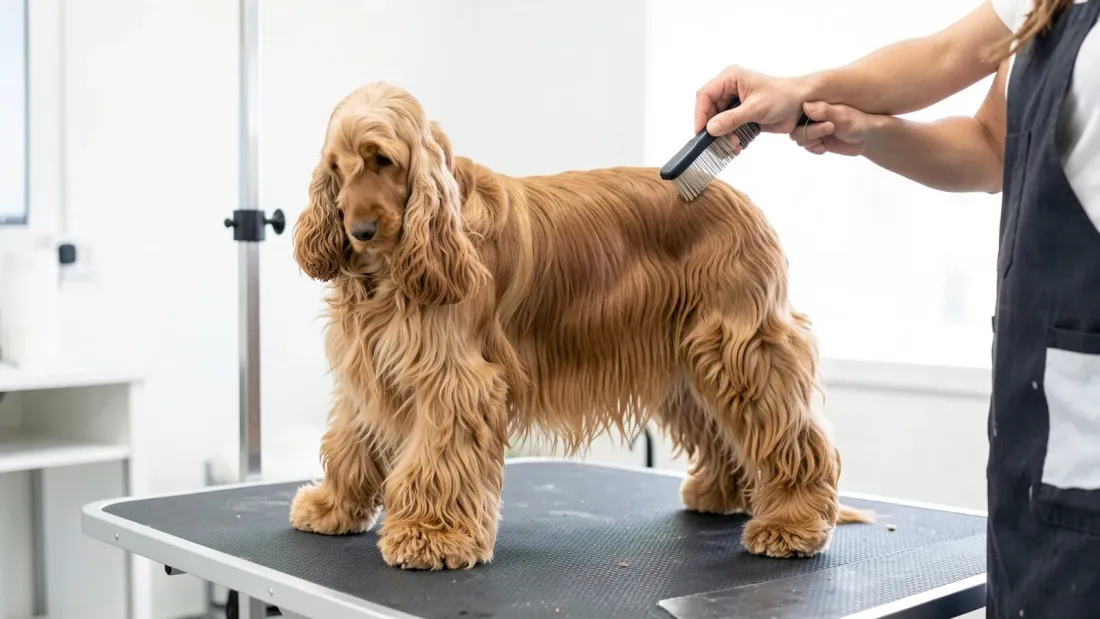
Cocker Spaniel Dog Grooming: Everything You Need to Know
The coat is only half of the job
Cocker Spaniel dog grooming has a reputation for being about haircuts, and the haircut does matter. The other half, the half that decides whether the dog is comfortable between salon visits, is quieter: keeping the long ear leather dry and clean, keeping the feathers from felting behind the elbows, and noticing skin changes early. A Cocker can look “done” from across the room and still have a mat at the ear base or a damp, yeasty smell you should not ignore.
This is a home-care guide, not a breed standard and not a veterinary manual. American and English Cockers are not identical, and individual dogs vary even more. Use what you see on your dog. For medical questions, including chronic ear trouble or skin disease, the right voice is your veterinarian. For the ordinary rhythm of brushing, bathing, and knowing when to book a groomer, the ASPCA’s dog grooming tips are a solid, species-level foundation. Their note on not shaving a pet down to the skin is especially relevant on a spaniel, whose coat is often asked to do more work than a close shave allows.
What a Cocker’s coat and ears actually ask of you
The body coat can be silky or slightly denser, with longer furnishings on the ears, chest, legs, and belly. Those furnishings are where mats start, because they swing, pick up water, and rub. The ears are long enough to wrap warmth and moisture around the ear canal, which is why a Cocker’s grooming routine has to include looking at and, when appropriate, gently cleaning the visible part of the ear, then drying it. If you see redness, swelling, discharge, or a sour smell, that is no longer a grooming task. It is a reason to call the veterinarian. The ASPCA makes the same distinction on its grooming page: a weekly wipe and a close look are part of care; signs of infection are not something to treat at home with leftover drops.
Paws collect the same long hair. Fur between the pads mats, holds mud, and can make a tidy dog slip on a hard floor. A careful trim, if you have been shown how, or a groomer’s pass, keeps the hair about even with the pads. Nails still need their own routine. A pretty salon cut does not make a too-long nail comfortable.
How often a Cocker needs a full professional trim depends on the coat, the household’s tolerance for feathers, and whether the dog swims or walks in wet grass. Many owners keep a regular groomer and do the brushing at home. That split is not a failure to “do it all yourself.” It is usually the arrangement that keeps the dog’s skin intact.
A home-care map you can actually follow
Use this table as a rhythm, not as a medical protocol. If something looks wrong, skip the chart and get advice.
| Area | What you are trying to prevent | A sensible home habit | Hand it to a professional when |
|---|---|---|---|
| Body coat and feathers | Mats at the armpits, collar, ears, trousers, and tail | Brush in sections several times a week; finish with a comb to the skin | The comb no longer passes, or you can feel tight felt against the skin |
| Ears, outer leather | Damp hair, hidden mats at the base, missed ticks or debris | Lift the ear, brush both sides, dry after baths or swimming, look and smell | There is odor, discharge, swelling, pain, or the dog shakes and scratches constantly |
| Face and eyes | Hair poking the eyes, stained damp hair you start scrubbing too hard | Keep hair out of the eyes with a careful trim or a groomer’s tidy; wipe gently if the vet has shown you a method | The eye itself is red, cloudy, or painful, or the skin around it is raw |
| Paws and nails | Mats between pads, slipped footing, nails clicking and catching | Check pads after walks; trim stray hair only if you can see and hold the foot still; keep nails short with help if needed | The pad is cut, cracked, or burned, or you cannot see the nail well enough to trim it safely |
| Bath and dry | A dirty coat that then mats as it dries; leftover moisture in ear leather | Brush first, bathe with a dog shampoo your veterinarian is comfortable with, rinse well, dry thoroughly, including ears and folds | The dog has a known skin condition, or bathing makes the itching worse |
| The “full clip” | A close shave that leaves the skin unprotected, or a rushed home haircut with scissors | Book a groomer for the shape you want; do light tidying only on clean, dry, untangled hair | You are tempted to cut out mats or shave a dirty coat at home |
A good groomer who already knows this dog is worth more than a new tool order. Ask them to show you the two or three spots that mat first on your particular Cocker, and to recommend a brush that matches this coat.
A working routine between salon visits
Set the dog up where you can see. A towel on your lap works for a calm adult; a non-slip mat helps if you use a table. Start with a stand-off: run your hands over the dog before the brush comes out. You will feel a mat sooner than you will see it.
Brush the body in layers, then the ears, one side at a time, supporting the leather so you are not dragging it. Comb through after the brush. If the comb stops, go back. Do not yank. Behind the ears and in the armpits, take smaller sections than you think you need. Finish with paws. Keep sessions short enough that the dog still likes you at the end. A Cocker that has learned grooming is a long argument will not be easier next week.
Baths follow a brush-out, as the ASPCA describes, with lukewarm water and a shampoo made for dogs. Keep water and shampoo out of the eyes and ear canals. Cotton at the ear opening, if it stays put and comes out again, can help keep splash down; it is not a reason to pack the canal. Dry the ear leather and the feathers fully. A damp Cocker put back on a bed will mat by morning.
If you trim at home at all, do it on a clean, dry, already-brushed dog, and stay away from the skin. Leave shape and close work to the person with the proper table and the better angles. Never try to carve a mat off with household scissors.
A checklist for the week, not for a fantasy schedule
- I can get a comb through the ears, armpits, trousers, and tail
- I have looked at and smelled the visible part of each ear
- Hair is not poking the eyes
- Pads are clear enough to see, and nails are not clicking loudly on hard floors
- After any bath or swim, the ears and feathers are dry
- I have a groomer I can book before the coat becomes a project
- Redness, odor, discharge, or pain means a veterinary call, not a new shampoo
Questions Cocker owners ask us after the first tangle
How often should a Cocker Spaniel be professionally groomed?
Often enough that the feathers do not felt and the dog can see and walk comfortably. The exact interval depends on coat texture, how much the dog swims, and how faithfully you brush at home. Ask the groomer who already handles this dog, rather than following a number copied from a forum.
Should I shave a Cocker in summer?
A shorter, tidy trim can make the coat easier to keep clean. A shave down to the skin is a different decision, and the ASPCA advises against shaving pets. The coat and the skin underneath can be more exposed to sun and irritation than people expect. Talk with a groomer and, if the dog has skin trouble, with your veterinarian before you request a close clip.
Why do the ears seem to need more care than the coat?
The ear leather is long, the canal can stay warm and moist, and hair at the base mats easily. That combination is why a quick look, a dry-off after water, and a low threshold for veterinary care matter as much as a pretty haircut. Do not put liquids in the ear unless a veterinarian has prescribed them.
What is the one tool worth buying first?
A brush that suits this coat, plus a comb that reaches the skin. Fancy clippers will not save a dog that is not being brushed. Once the comb passes easily, you can decide whether a detail trimmer or a regular salon visit will keep the face and paws tidy.